


In recent years, debates over the application and meaning of the First Amendment have intensified, often centering on the concept of the separation of church and state. Too often, these conversations neglect the historical and theological context that shaped this fundamental protection, leading to an erosion of understanding and, consequently, a misapplication of one of our nation’s most precious rights: the freedom of religious speech. Increasingly, it seems that the separation of church and state is interpreted not as a safeguard for religious expression, but as an attempt to cleanse public spaces of religious influence. Such an interpretation runs contrary to the original purpose of the First Amendment, which was designed to protect the public expression of religion from government control or suppression, not to silence it.
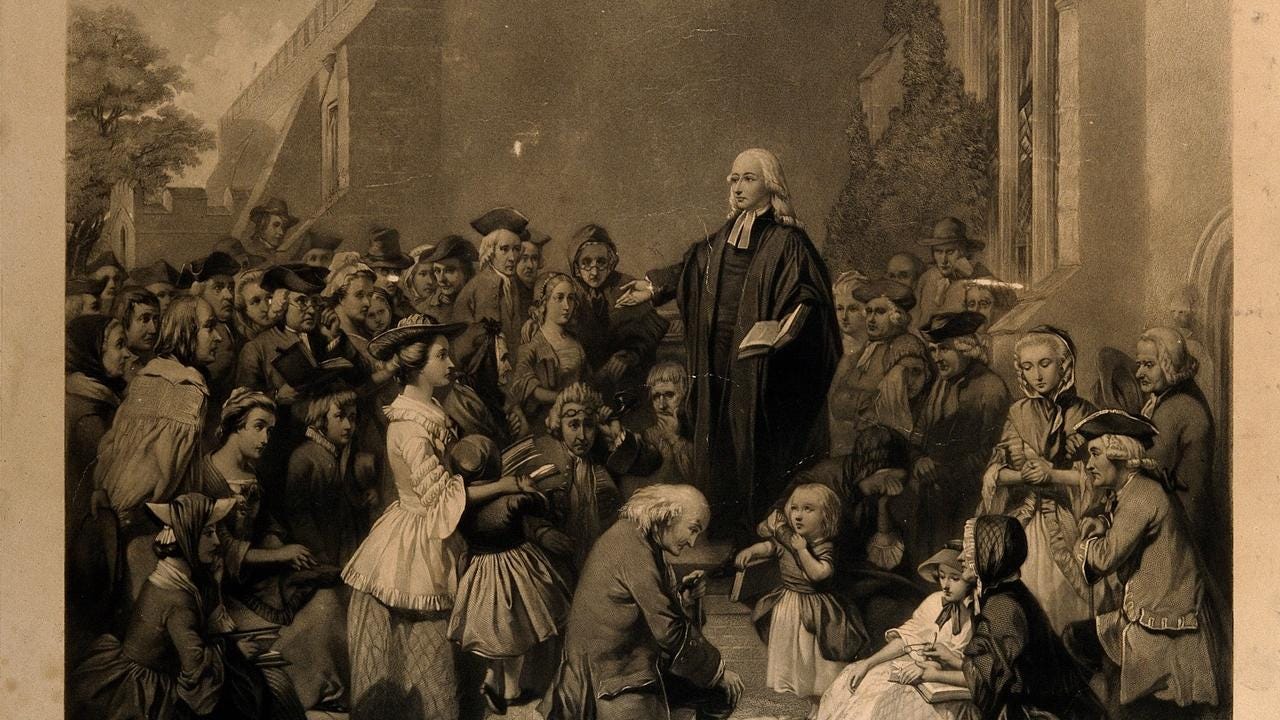
To appreciate why the First Amendment was designed to safeguard free religious speech in the public square, we must first consider the historical circumstances in which this provision was conceived. The framers of the Constitution were keenly aware of the abuses that occur when religion and state become entangled, having witnessed or learned from Europe’s history of religious conflicts and state-imposed faiths. The experiences of religious minorities—whether Quakers, Baptists, Catholics, or others—under governments that either enforced religious conformity or persecuted dissenters were fresh in their minds. Many of the early American colonies themselves were founded by those seeking freedom from religious oppression, and the legacy of this struggle made its way into the core ethos of American governance.
James Madison, often regarded as the “Father of the Constitution,” drew heavily from these experiences and from the influential writings of John Locke on religious freedom. Madison’s advocacy for religious liberty as a fundamental right found resonance in the First Amendment, which declares that “Congress shall make no law respecting an establishment of religion, or prohibiting the free exercise thereof.” The language is straightforward: the government is prohibited from establishing a state religion, and equally prohibited from interfering with the free exercise of religious beliefs. These two clauses, working in tandem, ensure that religion has a protected place in the public square, free from state endorsement and free from state censorship.
Yet, the contemporary debate often seems to misunderstand the significance of this dual protection. The Establishment Clause is invoked by some to argue that religious speech must be confined to private spaces, as though the public square were meant to be a bastion of secularism free from any religious presence. Such an interpretation creates an imaginary secular sanctity that the First Amendment never intended. Indeed, the concept of a secular public space sanitized of religious speech is an ahistorical construct, not reflective of the intent of the framers or the lived reality of early American public life. Public spaces, from the colonial meeting houses to the town squares, were often forums where matters of both civic and religious importance were openly discussed.
It is crucial to recognize that the separation of church and state, as articulated by Thomas Jefferson in his famous letter to the Danbury Baptist Association, was not meant to wall religion off from public influence. Rather, it was intended to prevent the government from exercising control over religious affairs. Jefferson wrote of building “a wall of separation between Church and State” precisely to reassure religious communities that their rights to freely express and practice their faith would be secure from governmental interference. The metaphor has been taken out of context by many modern interpreters, who seem to believe that religion must remain hidden, quarantined from public view. However, the wall was always meant to be a one-way protection: shielding religious institutions and expression from state power, not excluding religious voices from participating in the public discourse, although almost all religious people in America, save perhaps recent immigrant adherents to fundamentalist Sharia Islam, would find religious control over the State in a theocracy to be anathema to what they would find acceptable. Never mind, vocal opposition to free religious speech in the public square, and the inspiration of faith in those in public office, must be some nascent effort to establish theocracy under the epithet of “Christian Nationalism.” Nonsense.
Biblically speaking, the public proclamation of religious truth is integral to the life of faith, particularly in Christianity. Jesus himself ministered openly, engaging with people in synagogues, marketplaces, and public gatherings. The early Church carried forward this tradition, preaching and teaching publicly, even in the face of persecution. The First Amendment preserves this same right for American believers. When the framers enshrined protections for religious speech, they were not envisioning a world where faith would be relegated to the shadows, but rather one where religious convictions could be expressed freely and contribute to the public good.
Indeed, it is this contribution to the public good that makes religious speech in the public square both necessary and beneficial. Religion, for many Americans, is not merely a private conviction but a comprehensive worldview that informs their understanding of justice, morality, and the common good. To strip public discourse of religious voices would be to impoverish that discourse, removing from it the depth and richness that religious thought has to offer. From the abolition of slavery to the civil rights movement, religiously motivated speech has often played a prophetic role in American history, challenging injustices and advocating for moral reform. If religious speech were to be confined to private spaces, one can only imagine how much moral clarity and courage our society would lose.
The concern, of course, is that a strong presence of religion in the public square might lead to the establishment of religion or to religious favoritism. But the Establishment Clause is more than adequate to address this concern. It serves as a guardrail, ensuring that the state remains neutral in matters of religion, neither promoting nor inhibiting religious expression. As long as the government does not privilege one religion over another, or religion over irreligion, religious voices are free to speak, just as secular voices are. This neutrality does not mean that the state must cleanse public spaces of religious content; rather, it ensures that these spaces remain open to a diversity of voices, religious and secular alike.
The reality is that religious speech will often make some people uncomfortable, just as secular ideologies will inevitably discomfort others. Yet, the purpose of the First Amendment is not to provide comfort but to safeguard freedom, even when it comes at the cost of ideological discomfort. Religious believers have the right to express their views on moral and ethical issues in the same public forums where secular citizens express theirs. The government cannot and should not attempt to adjudicate which perspectives belong in the public square and which do not.
A biblical understanding of human society underscores this principle of free speech. In the Christian worldview, God created humanity with the ability to reason, to debate, and to pursue truth together in community. Just as the Apostle Paul reasoned with philosophers in the public squares of Athens, Christians today are called to engage with the broader culture in meaningful, respectful dialogue. This is not an act of coercion but of faithful witness. It is a testament to the dignity of the human person, made in the image of God, that we are allowed—indeed, encouraged—to engage one another in the public exchange of ideas, religious or otherwise.
At the same time, there must be a balance. Christians who seek to contribute to public life must remember that the gospel compels not only proclamation but also humility and love. The First Amendment protects the right to speak freely, but it does not absolve us of the responsibility to speak truth with grace. The call to be salt and light in the world means participating fully in society while respecting the rights of others to hold and express differing views. The freedom of religious speech in the public square is not an excuse for domination but a call to faithful, prophetic engagement.
The First Amendment’s protection of free religious speech in the public square is a vital part of our democratic heritage. It reflects a vision of a society where diverse voices can contribute to the common good, where religious believers are free to express their faith without fear of government reprisal, and where the state remains neutral yet open to the richness that religion brings to public life. Misunderstanding the purpose of church-state separation risks eroding these freedoms, diminishing both religious and secular voices in our collective discourse. It is imperative that we recover and preserve this understanding, not only for the sake of religious liberty but for the health of our democracy.